
I still remember the weight of the slab in my hands, the cold clarity of the acrylic case holding a fragment of my childhood, now valued in the millions. It was 2022, and I had just shattered a world record, paying $5.3 million for a sliver of illustrated cardboard—the PSA 10 Pikachu Illustrator. They called it an investment, a masterpiece, the pinnacle of the Pokémon TCG world. I saw it as a trophy, a story to be told. Now, as I prepare to send it back into the wild through auction in 2026, the story has grown thorns, tangled in the very platform that was meant to democratize its ownership.
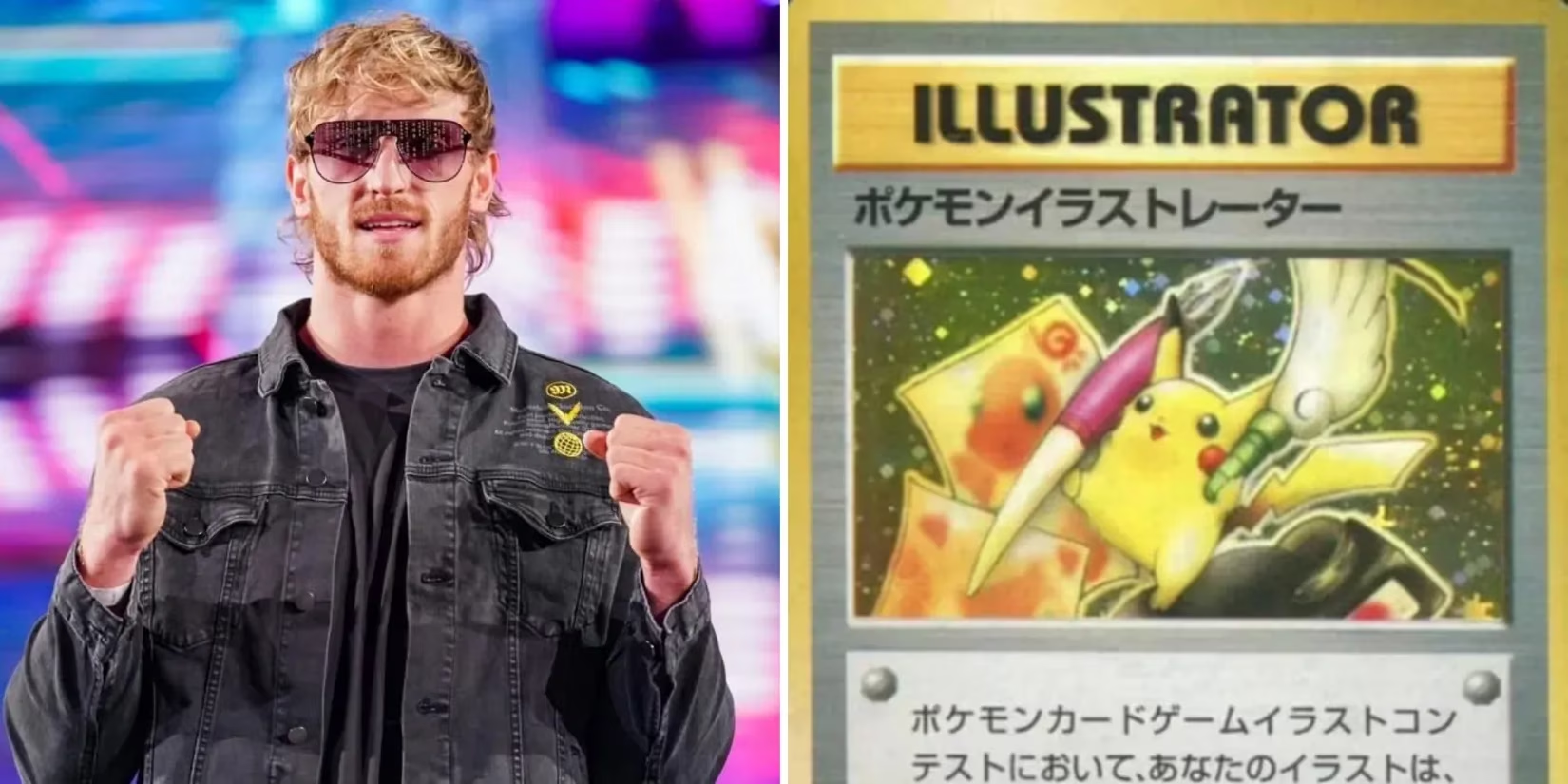
The dream was beautiful in its simplicity. On shows like The Big Money Show, I spoke of a new horizon for young investors. Why chase volatile stocks when you could hold a piece of history, of art, of pure nostalgia? The Pikachu Illustrator was my flagship example. Its value wasn't just climbing; it was soaring on the wings of a generational passion. To share that potential, I turned to Liquid Marketplace, a platform I helped build. The idea was revolutionary: tokenize the card. Fracture its immense value into attainable shares, allowing fans and collectors to own a piece of the legend, to ride the wave of its appreciation together. It was a community built around a shared treasure.
But somewhere in the digital ledger, the music stopped. The timeline is a ghost in the machine:
-
2022: The record-breaking purchase. A moment of pure, unadulterated triumph. 🏆
-
2023-2024: The card is listed on Liquid Marketplace. Tokens are sold, a community of partial owners is born.
-
Mid-2024: A decision is made. I execute a "substantial buyout" to reclaim sole ownership of the card, over 18 months ago now. The platform assured me—assured everyone—that the funds from this buyback would flow seamlessly to the token holders. It was a transaction, a closing of one chapter.
Yet here we are, on the cusp of 2026, and that promised river of profit has run dry. The truth, which I had to confront publicly, is a bitter pill: those who invested their faith and funds into owning a piece of this card through tokens have seen nothing. Zero. The reason? A shadow fell over parts of Liquid Marketplace—"regulatory scrutiny." And in that bureaucratic twilight, the disbursements froze.
The irony hangs in the air, thick and uncomfortable. I am a co-founder. My name is woven into the platform's DNA. And yet, I find myself in the impossible position of being both the source of the asset and a petitioner at its own gate. I am speaking with the company, pushing for resolution, but the question echoes: if not me, then who? The accusation of a scam is a venom I never anticipated. To those feeling betrayed, I hear you. This was meant to be a celebration of value, not a lesson in its abstraction.
So, the card sits with me, its gleam now holding a different light. It is no longer just a collectible; it is a covenant I inadvertently broke. The auction in February 2026 looms. The market whispers that it will sell for more, perhaps far more, than my original purchase. That should be a victory lap. Instead, it feels like a precipice. If this isn't resolved, each higher bid will only deepen the wound for those waiting, a constant reminder of a digital IOU left uncashed.
This journey has taught me that value is a mosaic. It is not just in the cardboard and the ink, or even in the price realized at auction. It is in the trust of a community, the integrity of a promise, and the transparency of a process. My Pikachu Illustrator is a prisoner of its own legend, caught between its tangible worth and the intangible debt of a failed digital experiment. As I prepare to let it go, I am not just selling a card. I am navigating the aftermath of a dream that promised shared light but, for now, has left some in the dark. The final chapter of this story has yet to be written, and its price will be measured in more than just dollars.