
I’ve been playing the Pokémon Trading Card Game long enough to know that the meta is never truly settled. Like a planetary system with hidden objects, some cards orbit in darkness for months — even years — before a new gravitational pull drags them into the spotlight. As we sit here in 2026, looking back at the turbulent evolution of competitive play, a handful of forgotten cardboard rectangles have taught me one lesson: never toss a card into the bulk pile too quickly. They might just be sleeping dragons waiting for the right spell to wake them.
Farigiraf ex – The Watchdog That Learned to Bark
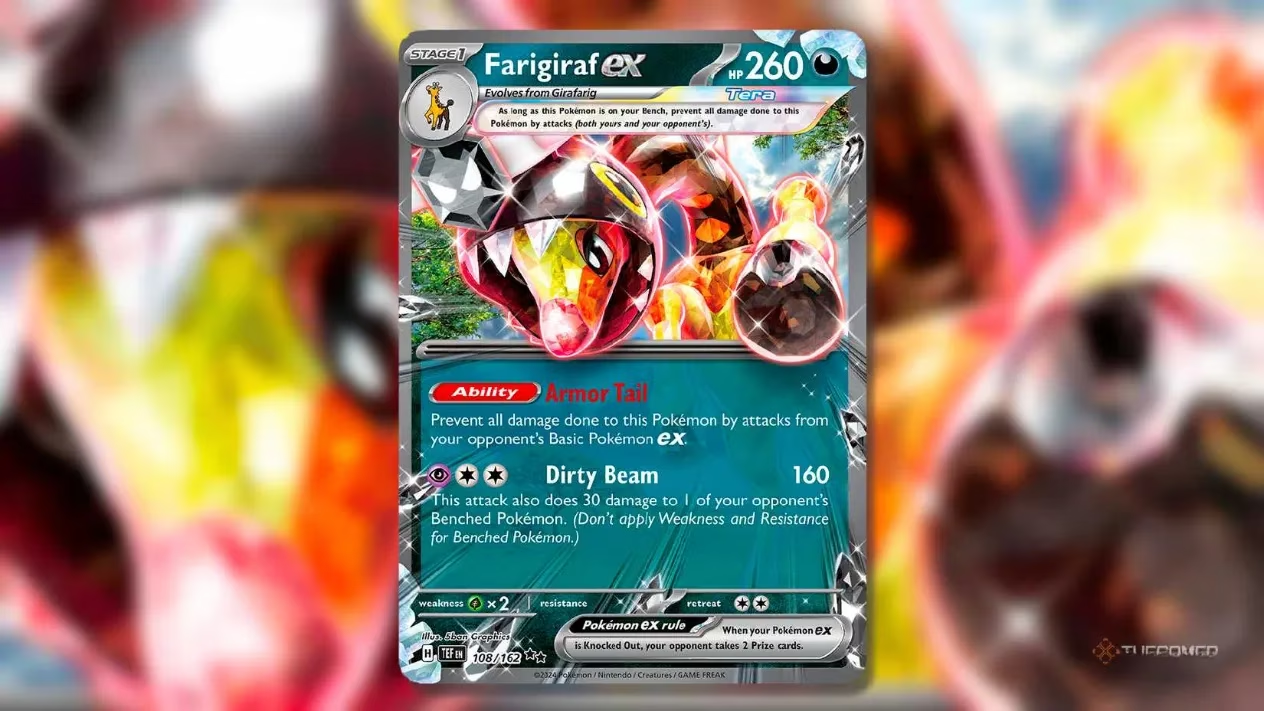
When Farigiraf ex first appeared in Temporal Forces, I remember scanning its ability and shrugging. ‘Blocks damage from Basic ex Pokémon? That’s cute,’ I thought. At the time, the format was dominated by evolved attackers like Gardevoir ex and Charizard ex, so a shield against Basics felt like carrying an umbrella in a desert. The card gathered dust — a silent sentinel no one needed. But then came the likes of Miraidon ex, Iron Hands ex, and the terrifying Roaring Moon ex. Suddenly, basic Pokémon were everywhere, and Farigiraf ex transformed from a forgotten benchwarmer into a stadium-wide panic button. It was as if a guard dog had finally recognized the intruder it was trained to stop, emerging from its kennel with teeth bared to hold back the tide. In top cuts and local leagues alike, this giraffe-shaped wall became a tech choice I’d slot into any deck that could afford the space.
Energy Switch – The Rusty Key That Unlocked a Flood
Every era has its unassuming Item cards. Most players treat Energy Switch like pocket change — a reprint that appears and disappears without ceremony. I owned a playset of the Scarlet & Violet printing for months and never once considered using it. Then Roaring Moon ex decks started to surface. Those lists needed to move Darkness energy between Pokémon at lightning speed, and suddenly this common card became the lynchpin of a strategy that could knock out anything in one swing. Energy Switch behaved like a rusty key I’d kept on a shelf, only to discover it opened the floodgates to an explosive, high-velocity win condition. It wasn’t flashy, but in the right hands, it was busted.

Dragapult ex – The Jet That Finally Found Its Runway
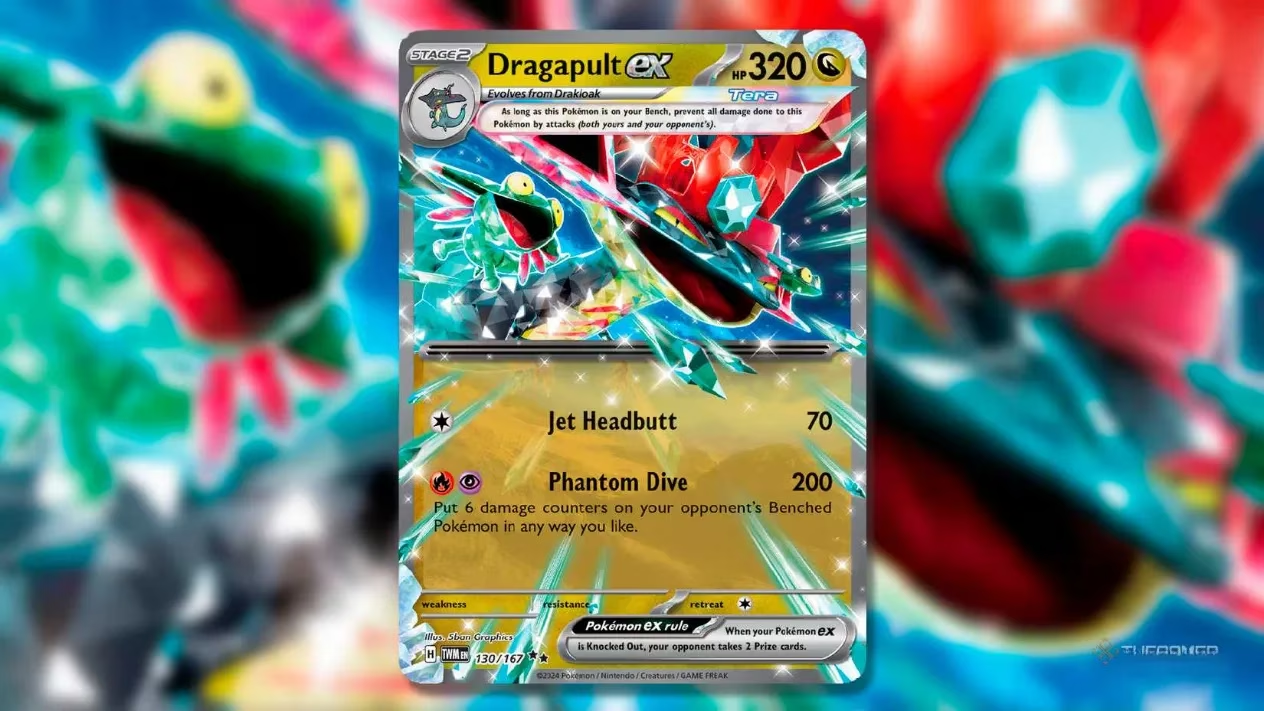
I’ll admit, when Twilight Masquerade dropped, I called Dragapult ex ‘too slow’ right alongside everyone else. Paying two Psychic and one Colorless for Phantom Dive felt clunky, and its 10-damage counters while spread-worthy didn’t justify the setup. Many players, myself included, shelved it almost immediately. Then came Sparkling Crystal, an Ace Spec Tool that reduced Tera Pokémon’s attack costs by one Colorless. All at once, Dragapult ex needed just a single Psychic energy to start sniping benches and active Pokémon alike. It was like watching a fighter jet finally find its runway after circling for months — once airborne, nothing could catch it. From that moment on, Dragapult ex dominated tournaments, and you’d be hard-pressed to find a top-tier list without it.
Dark Patch – A Vintage Potion That Grew More Potent
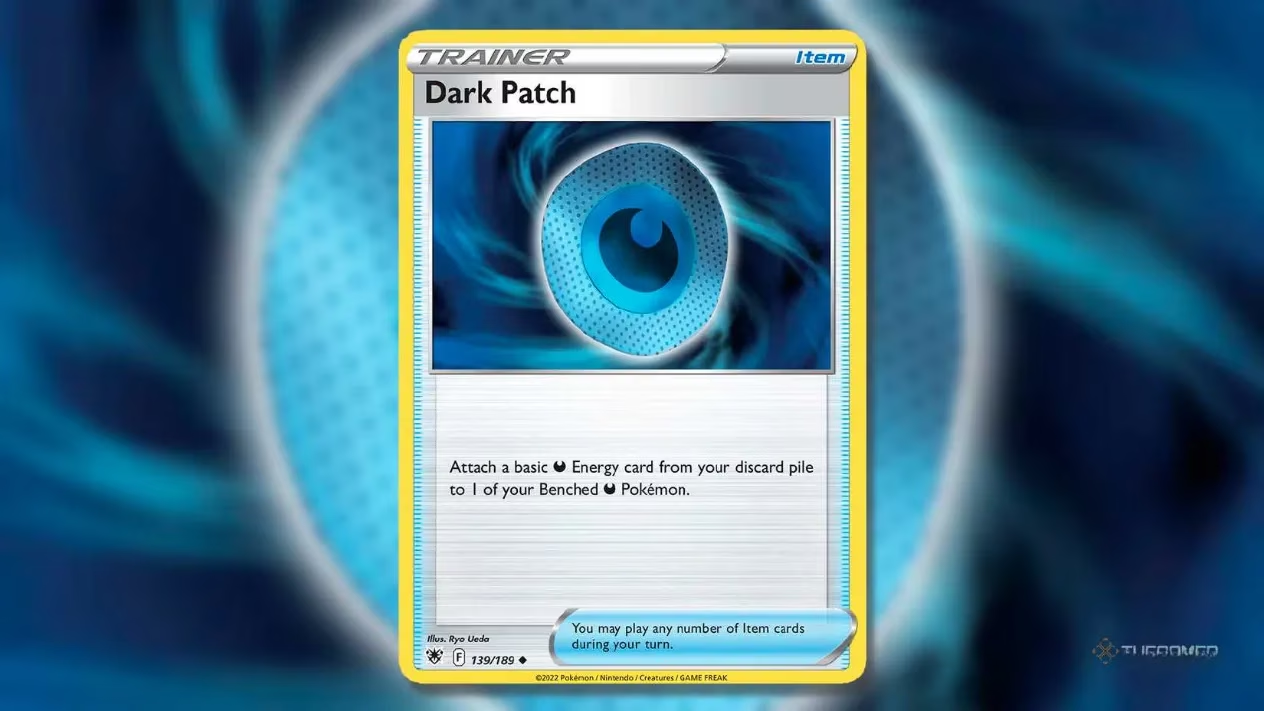
Veterans of the X&Y era remember Dark Patch as a menace, but its reprint in Astral Radiance felt like a relic without a temple. Darkness-type Pokémon lacked the speed to abuse it, and the card drifted through format after format as a forgotten curiosity. Then Scarlet & Violet unleashed Roaring Moon ex, a Darkness-type beast that thirsted for fast energy acceleration. Dark Patch slid seamlessly into decks, allowing players to attach energy from the discard pile to benched Darkness Pokémon. It was as if an old potion, left at the back of the apothecary, had suddenly reacted with a new ingredient to become the most dangerous elixir in the game. For several seasons, any Darkness archetype lived and died by how many copies of this Uncommon Item they ran.
Regidrago VStar – The Forgotten Monster That Remembered Everything
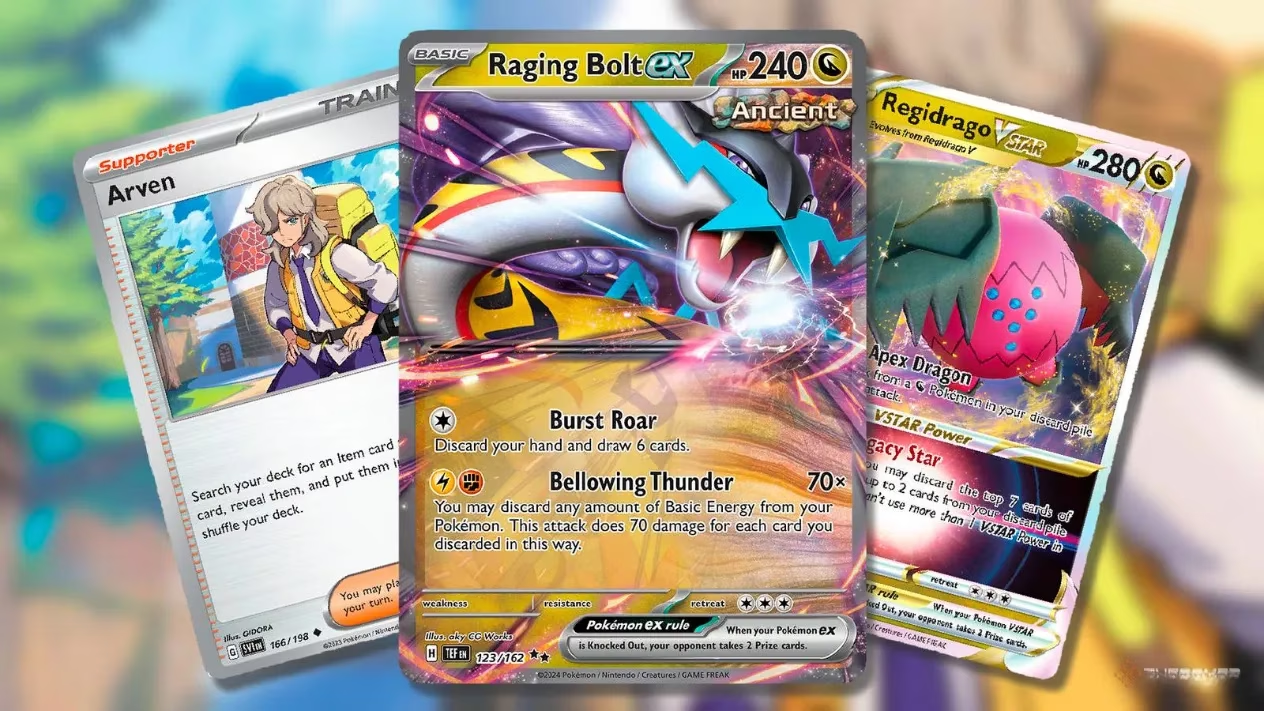
Regidrago VStar was a final-act Sword & Shield card that nobody bothered with at launch. Its attack let you copy any Dragon-type’s attack from your discard pile, but the pool of worth-while options was shallow. I chuckled when I pulled the holo rare at a prelease. Fast forward to the Scarlet & Violet era, and Kyurem and other devastating Dragon-types had filled the discard pile with absurd power. Regidrago VStar became a shapeshifting nightmare, able to snipe, sweep, and steal games out of nowhere. It was a monster that had been practicing all those useless moves in the dark, only to reveal it had memorized an arsenal of world-enders. Tournament after tournament, Regidrago VStar dictated the pace of the format.

Arven – The Unassuming Librarian Who Became Everyone’s Advisor
When the Scarlet & Violet base set released, I distinctly remember forums calling Arven a ‘waste of a Supporter for the turn.’ Fetching an Item and a Pokémon Tool sounded mediocre next to the flashy Boss’s Orders or Research. But slowly, painstakingly, Arven began to infiltrate every deck I built. Need a Rare Candy and a Forest Seal Stone? Arven. Need an Ultra Ball and a Technical Machine? Arven. The card behaved like a quiet librarian who somehow held every answer in the building, and soon enough, players lined up at his desk before every decisive turn. Today, even in 2026, Arven’s influence can still be felt in Expanded formats where consistency is king, proving that wisdom beats raw power more often than we think.

Looking back, these cards remind me that the Pokémon TCG is not a sprint but a marathon of patience and perspective. The bulk bin is never a final resting place; it’s a waiting room where yesterday’s rejects can become tomorrow’s champions. As we continue into 2026 and beyond, I’ll keep a second look for the underestimated, the overlooked, and the quiet. Because sometimes, the most dangerous roar starts as a whisper.