
The Pokémon Trading Card Game has always been a battlefield of strategy, luck, and the occasional absolutely bonkers card that sends the meta into a tailspin. Some cards are just good; others are so terrifyingly efficient that they warp the entire fabric of competitive play. And then there are those rare gems—or nightmares—that teach the Pokémon Company valuable lessons about what not to print ever again. From adorable babies that lock you out of items to three legendary gods who decided balance was overrated, these are the cards that didn't just sit in binders—they changed the game itself.
Cleffa: The Tiny Terror That Started It All
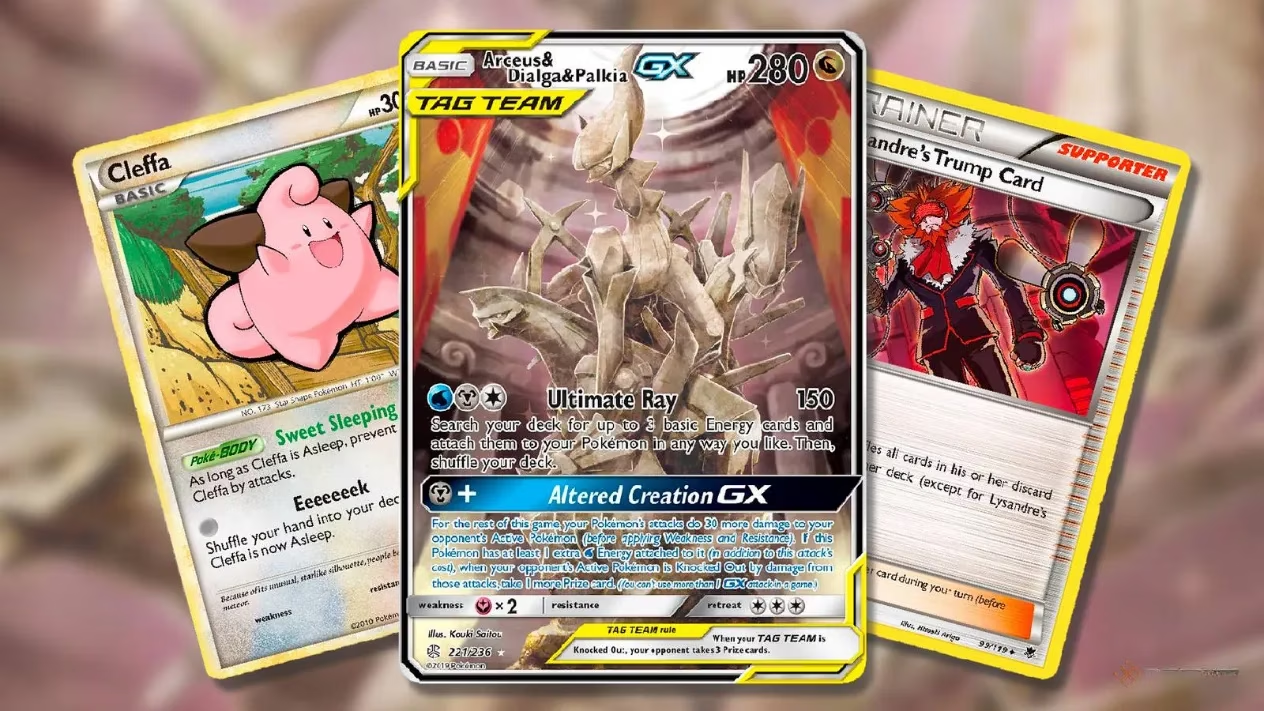
Before Cleffa waddled onto the scene in the HeartGold & SoulSilver base set, Baby Pokémon were mostly adorable filler. But this little pink puffball had a secret weapon: a zero-energy attack that let you reshuffle your hand and then went to sleep, becoming immune to damage thanks to its Poké-Body. Suddenly, consistency became a luxury every deck could afford. Fast forward to the Scarlet & Violet era, and Cleffa returned with a slightly more balanced—but still infuriating—ability to draw until you had six cards. Can a Pokémon be both the cutest and the most annoying piece of deck acceleration? Yes. Yes it can.
Boss's Orders: The Ultimate Power Move
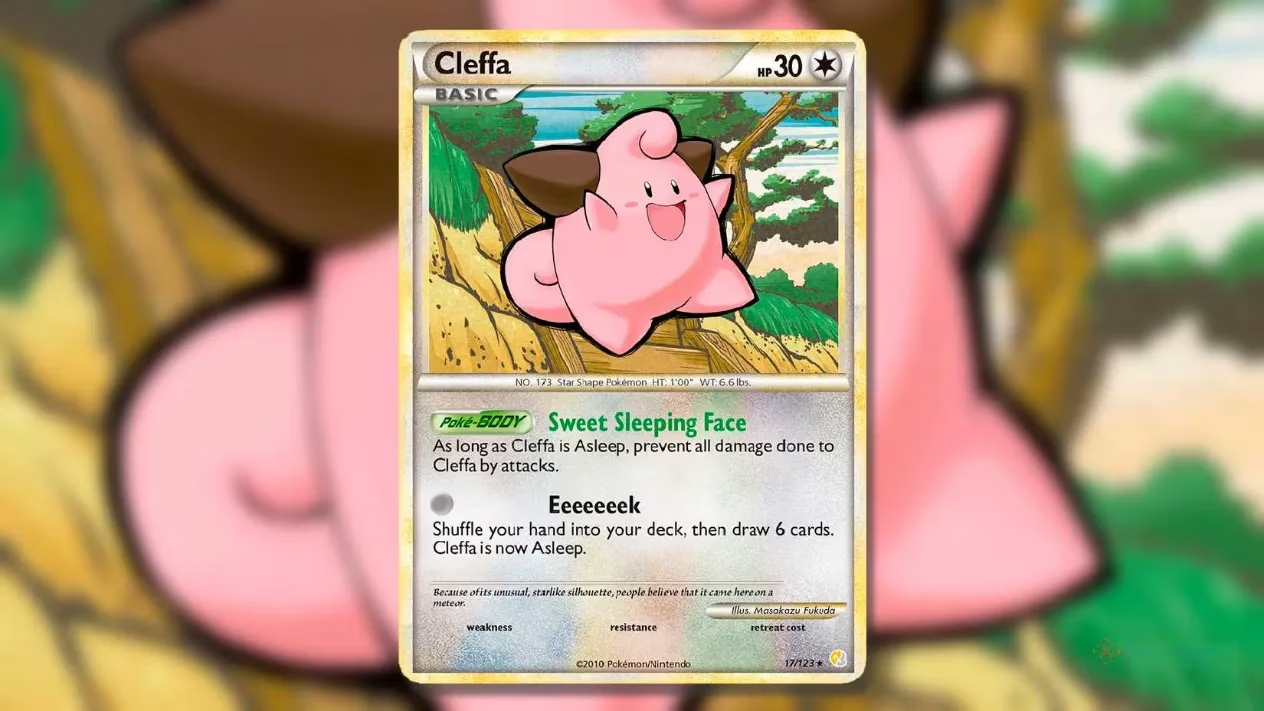
If there’s one card that every competitive player treats like oxygen, it’s Boss’s Orders. First unleashed in the Sword & Shield era, this Supporter lets you drag any of your opponent’s Benched Pokémon into the Active Spot with zero restrictions. Want to pick off a weakened VMAX? Need to stall by pulling a high-retreat-cost lump? Go right ahead. The card has seen so many reprints that it’s practically a seasonal tradition—because what’s a format without the ability to yank your opponent’s hopes and dreams straight into the fray? The question isn’t whether you should run it; it’s how many copies you can squeeze into your deck.
Zoroark GX: The Draw Engine That Defined an Era
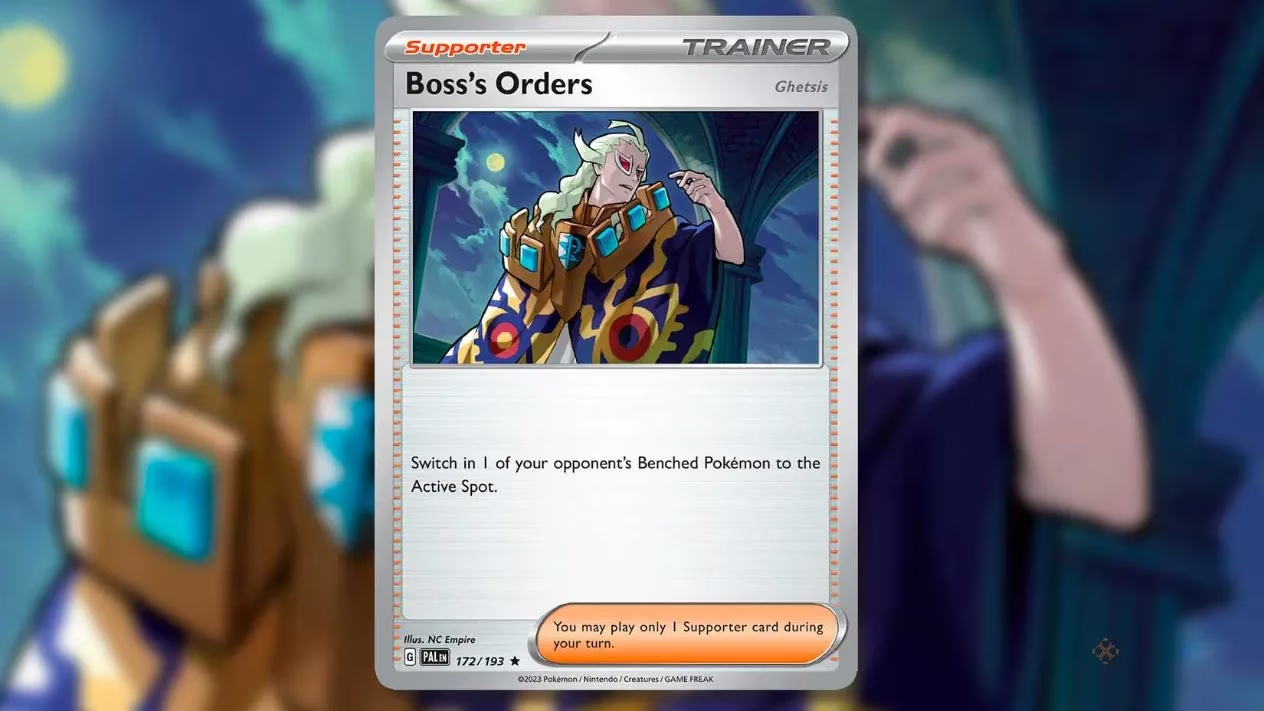
The Sun & Moon era gave us Zoroark GX, and with it, a straightforward but devastating ability: once per turn, discard a card to draw two. It was the card-trade king, turning dead cards into fresh gas. Players built entire archetypes around this shapeshifting fox, and even when it rotated out, its spirit lived on. N’s Zoroark EX later tried to recapture that glory in Scarlet & Violet, but by then, power creep had turned the dream into a modest side option. Still, if you ever wondered why consistency cards make deckbuilders weep with joy, just remember: Zoroark GX would trade its own tail for two cards any day.
Double Colorless Energy: The Special Energy That Refuses to Die
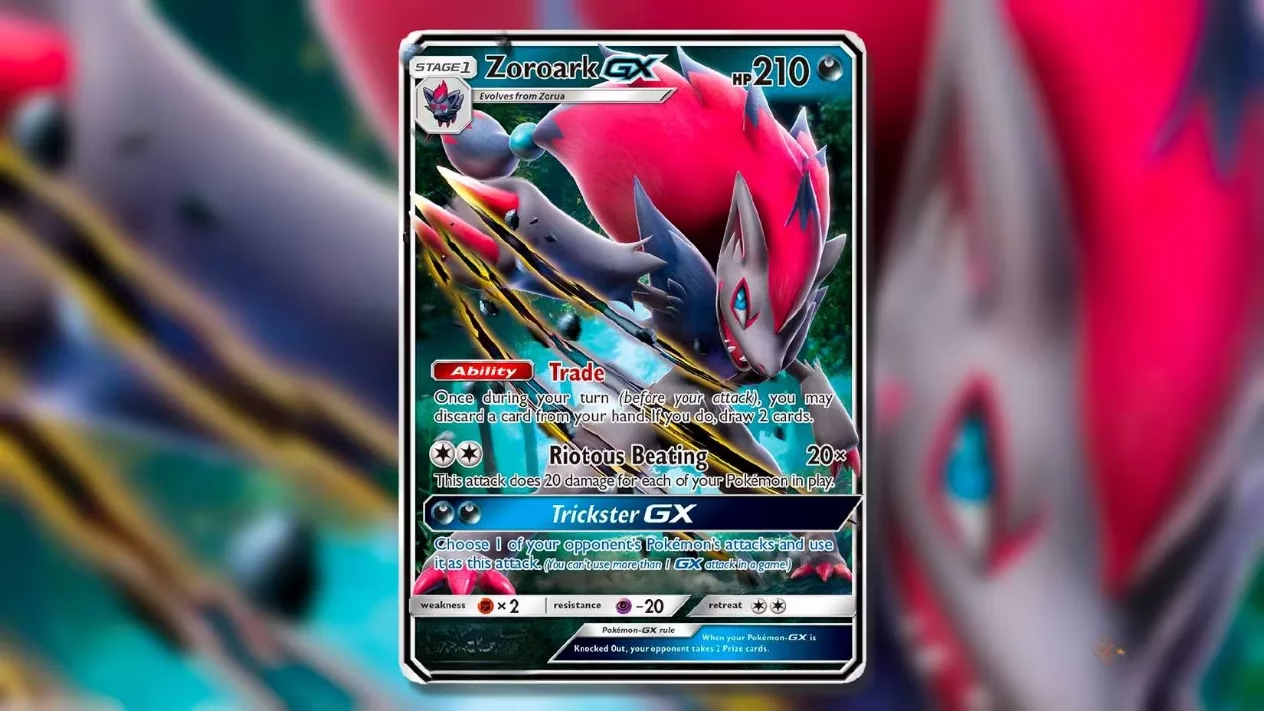
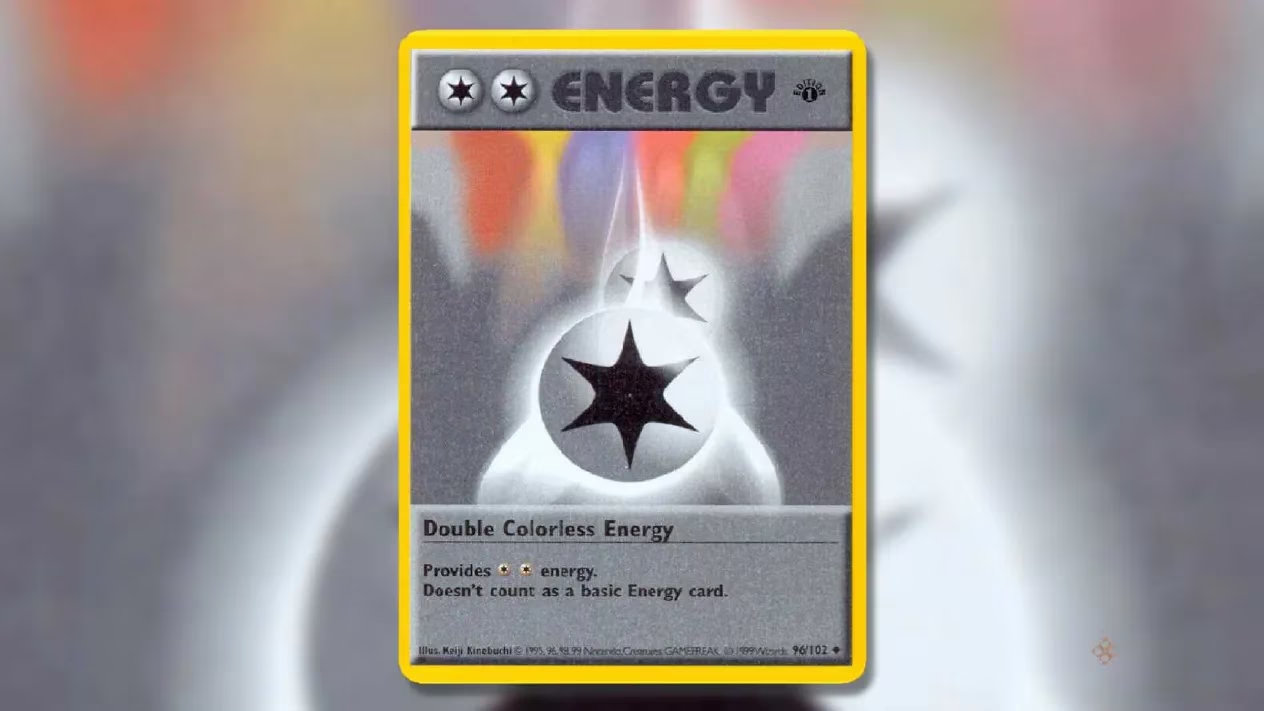
Ever since Base Set, Double Colorless Energy has been the unofficial sponsor of “I need to attack one turn earlier.” Providing two Colorless Energy with a single attachment, this card has propped up countless archetypes that would otherwise be too sluggish to compete. It rotates out, decks collapse, and then it gets reprinted again like a phoenix made of pure utility. Without DCE, many powerful attackers would be nothing more than binder bling. So here’s to the simple joy of cheating the energy curve—because two energy is always better than one.
Lysandre's Trump Card: Banned for a Reason
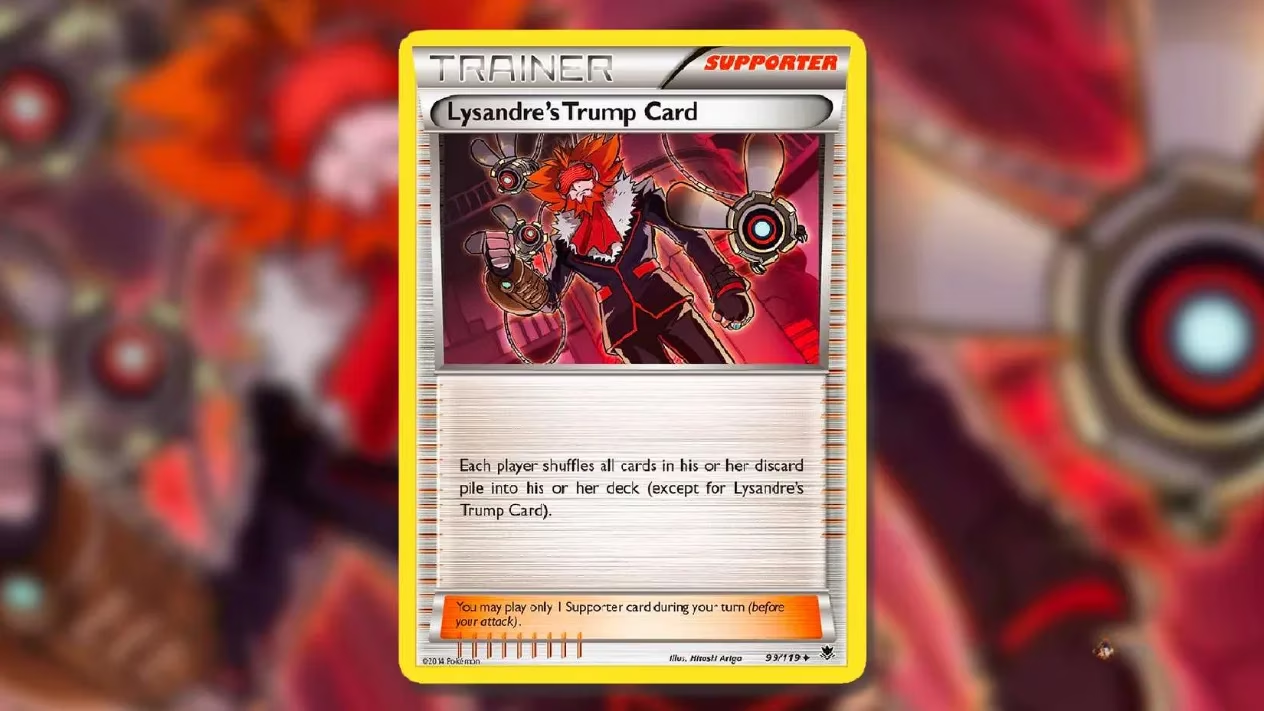
The Pokémon TCG rarely bans cards, but when it does, you know something went terribly wrong. Lysandre’s Trump Card was a Supporter from the X & Y era that shuffled both players’ entire discard piles back into their decks. Yes, both players, everything. Suddenly, deck-out strategies were a joke, and matches dragged on until someone’s resolve shattered. The card was so meta-warping that it became one of the few to be outright banned—and the Pokémon Company swore never to let such a design slip past again. If you ever find yourself missing your discarded resources, just remember: Lysandre’s Trump Card was the “friend” who gave you back your cards but also gave them to your enemy.
Seismitoad EX: The Toad That Said “No Items for You”
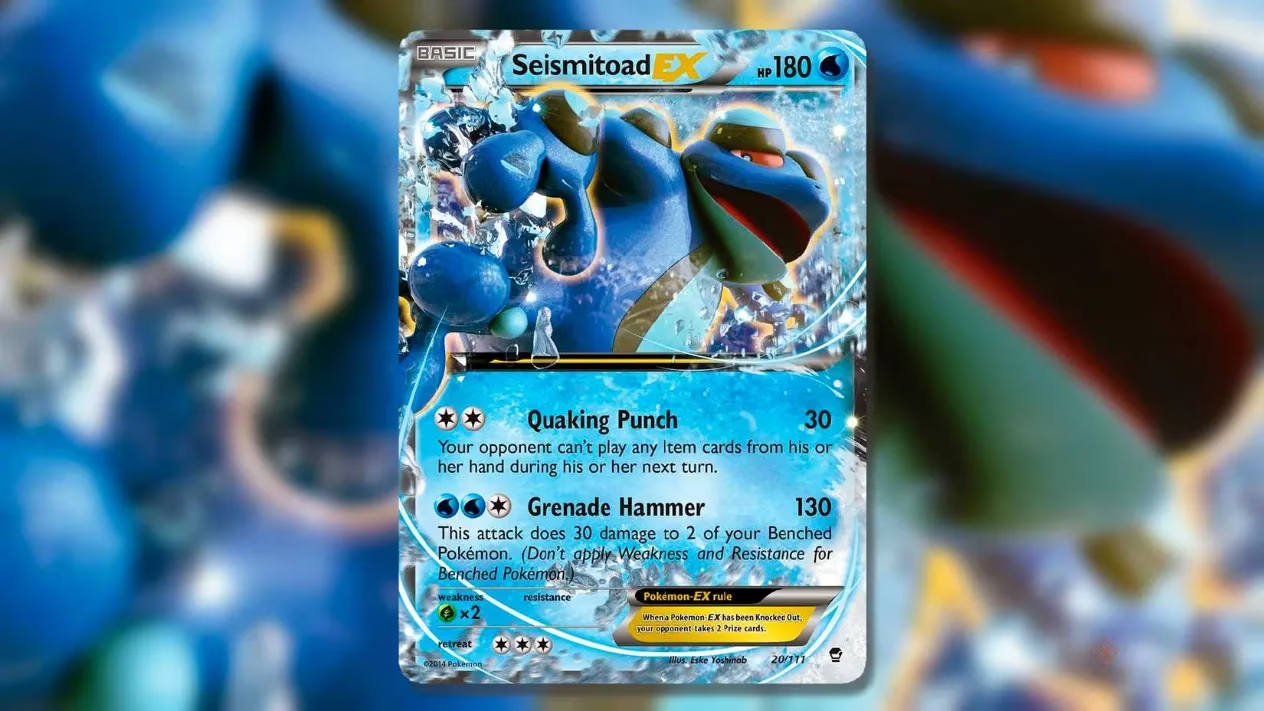
In the video games, Seismitoad is about as memorable as yesterday’s weather. But in the TCG’s X & Y era, it became an absolute menace. Seismitoad EX’s Quaking Punch dealt an item lock for a turn—while also hitting for a respectable 130 damage. Can you imagine playing against a frog that stops you from using Nest Balls, Rare Candies, and every other trainer essential while it smacks you senseless? The design lesson here was clear: a Pokémon with both oppressive disruption and heavy offense is a recipe for salty handshakes and tilted tables.
Arceus & Dialga & Palkia GX: When Three Gods Are Too Many
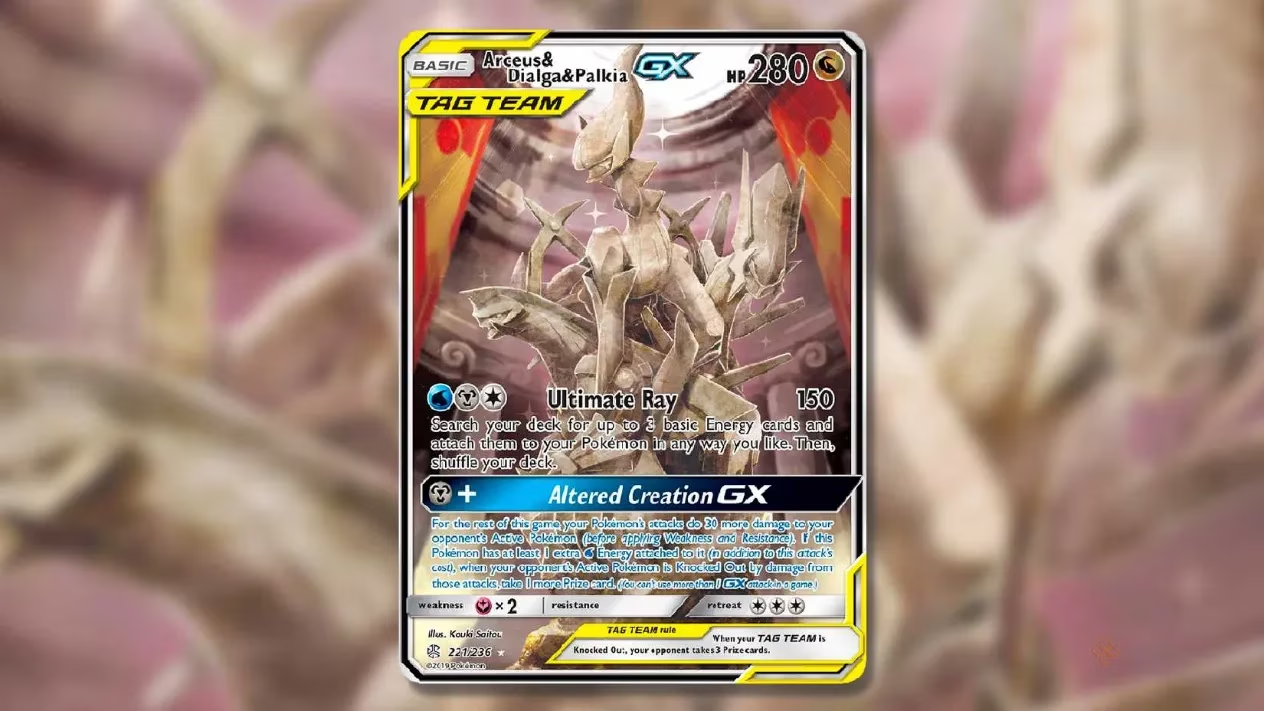
Tag Team cards were already pushing the power envelope, but then the Pokémon Company said, “What if we put the three most legendary beings on a single card and gave it an attack that boosts all future damage by 30 and makes KOs grant an extra prize?” The result was Arceus & Dialga & Palkia GX, a card so game-ending that it felt like your opponent was playing with cheat codes. Once that GX attack resolved, victories came faster than you could say “power creep.” The meta revolved around it until the card finally rotated out, and its legacy remains a cautionary tale: sometimes three heads are better than one—usually for creating absolute chaos.
Uxie and Shaymin EX: The Hand-Refreshing Duo
If consistency is king, then Uxie and Shaymin EX were its court jesters turned royal advisors. Uxie’s “draw until you have seven cards” upon Bench play was a godsend for decks starved for options. Then Shaymin EX upped the ante: same draw-up-to-six ability, plus an attack that bounced it right back to your hand to be reused. The little hedgehog became an infinite loop of card draw, making “dead hand” a phrase heard only in fairy tales. These two proved that the best way to win is sometimes just to keep drawing until you find the answer—or until your opponent sighs and scoops.
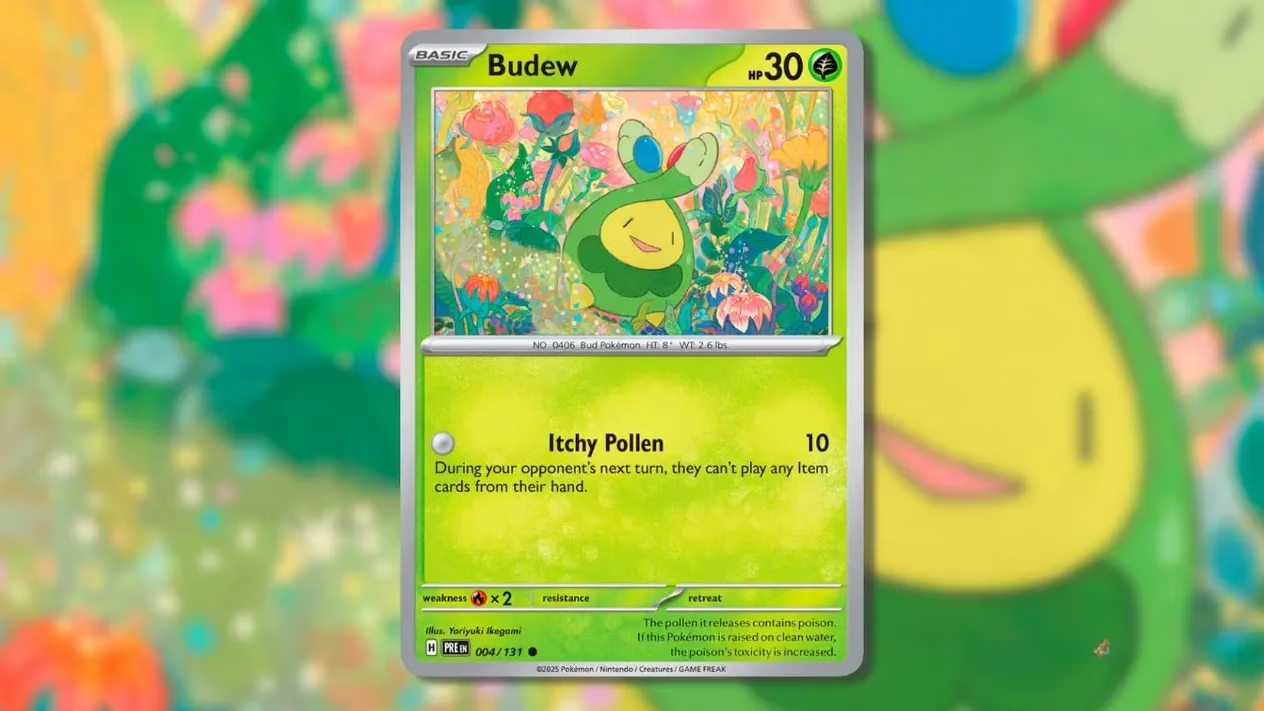
Budew: The Littlest Item Lock Nightmare
The Scarlet & Violet era brought back Baby Pokémon with a vengeance, and Budew was the poster child for adorable oppression. For zero energy, this tiny plant could attack and prevent your opponent from playing any Item cards on their next turn. Imagine staring down a smiling bud on turn one, only to realize you can’t use Nest Ball, Ultra Ball, or Rare Candy for the rest of the game. It doesn’t look threatening, but after four turns of item lock, even the bravest trainers develop a lifelong fear of gardening. Budew teaches a valuable lesson: power isn’t always about size—sometimes it’s about being an unremovable nuisance.
Professor's Research: The Supporter That Needs No Introduction
Every decklist starts the same way: four copies of Professor’s Research, and then the rest. Originally known as Professor Juniper, this card has seen more faces than a hall of mirrors, featuring every regional professor as it gets reprinted endlessly. Its effect? Discard your hand and draw seven cards. Simple, elegant, and the ultimate bailout from a bricked start. Can you imagine competitive Pokémon without this instant hand refresh? It’s the glue that holds together the archetypes, the safety net beneath every shaky opening, and the reason why drawing a fresh seven never gets old. Juniper, Sada, Turo, whoever—just take your cards and smile.
From sleepy babies to banned train wrecks, these cards are more than just rectangles of shiny cardboard—they’re the defining moments that taught players to adapt, innovate, and occasionally pray to Arceus that their opponent doesn’t topdeck a Boss’s Orders. And as the TCG continues to evolve into 2026 and beyond, one thing is certain: the next game-changer is probably already lurking in a new set, waiting to turn the meta on its head once again.