
I have been collecting and battling with the Pokemon Trading Card Game for decades now, and honestly, it still manages to surprise me. From the moment I ripped open my first booster pack as a kid to the competitive tables I sit at in 2026, the game has always seemed deceptively simple on the surface, yet it hides plenty of confusing rules and strange interactions underneath. Today I want to share the strangest mechanics I have encountered over the years, breaking them down the same way I wish someone had broken them down for me when I was first learning. Whether you are a fresh trainer or a seasoned veteran, these quirks can catch anyone off guard, so let me help you make sense of them.
Coin Flipping With Dice: Why Everyone At My Locals Does This
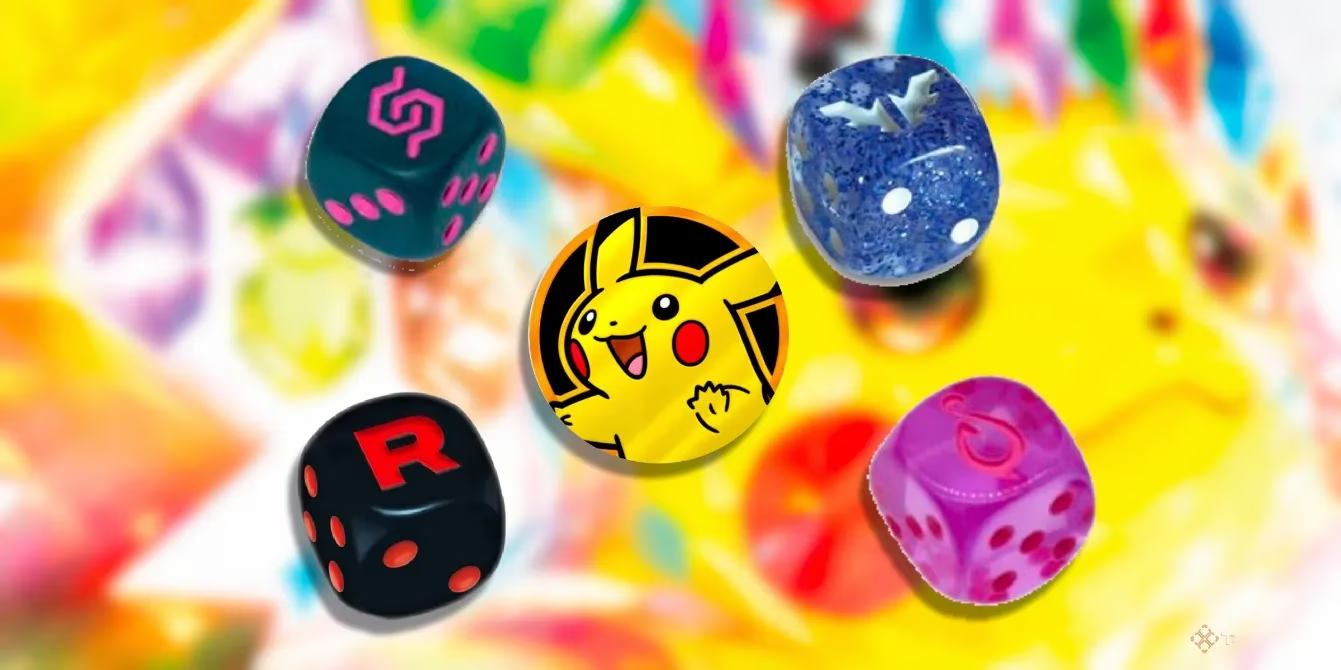
One of the first things I noticed when I started playing at my local game store was that nobody actually flips coins. That sounds odd because so many cards say 'flip a coin,' but almost every competitive player I have met uses a die instead. The reason is simple: a coin flip can be manipulated, and coins love bouncing off the table and rolling under someone's chair. A die roll, on the other hand, is truly random and stays where you throw it. I honestly prefer this method because even numbers feel like heads and odd numbers feel like tails, which keeps everything fair. The Pokemon Company seems to agree, since they have been including dice in Elite Trainer Boxes for years now to standardize this approach.
Tera Pokemon: Are They Just Weird Looking ex Cards?
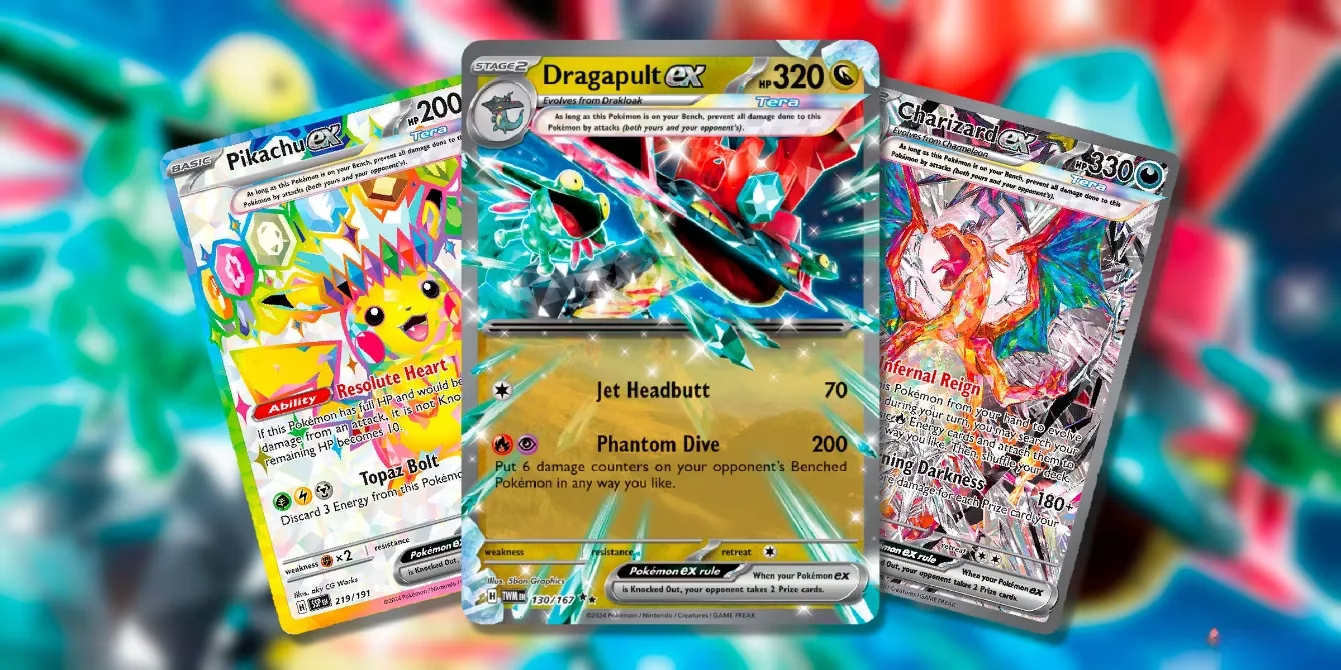
When the Scarlet & Violet era introduced Tera ex Pokemon, I will admit I was a bit skeptical at first. At their core, they are still ex Pokemon, so they give up two Prize Cards when knocked out, but they come with a twist. Tera Pokemon swap their usual type while keeping their original Energy costs. My favorite example is the Darkness Tera Charizard ex. It hits for Darkness-type damage but still uses Fire Energy, which gives decks a coverage option they would not normally have. On top of that, Tera Pokemon are immune to damage while sitting on the Bench. That small detail has saved me from countless spread-damage strategies, so I have grown to love these strangely gorgeous cards.
Fossil Pokemon: Ancient Rules That Still Confuse Me
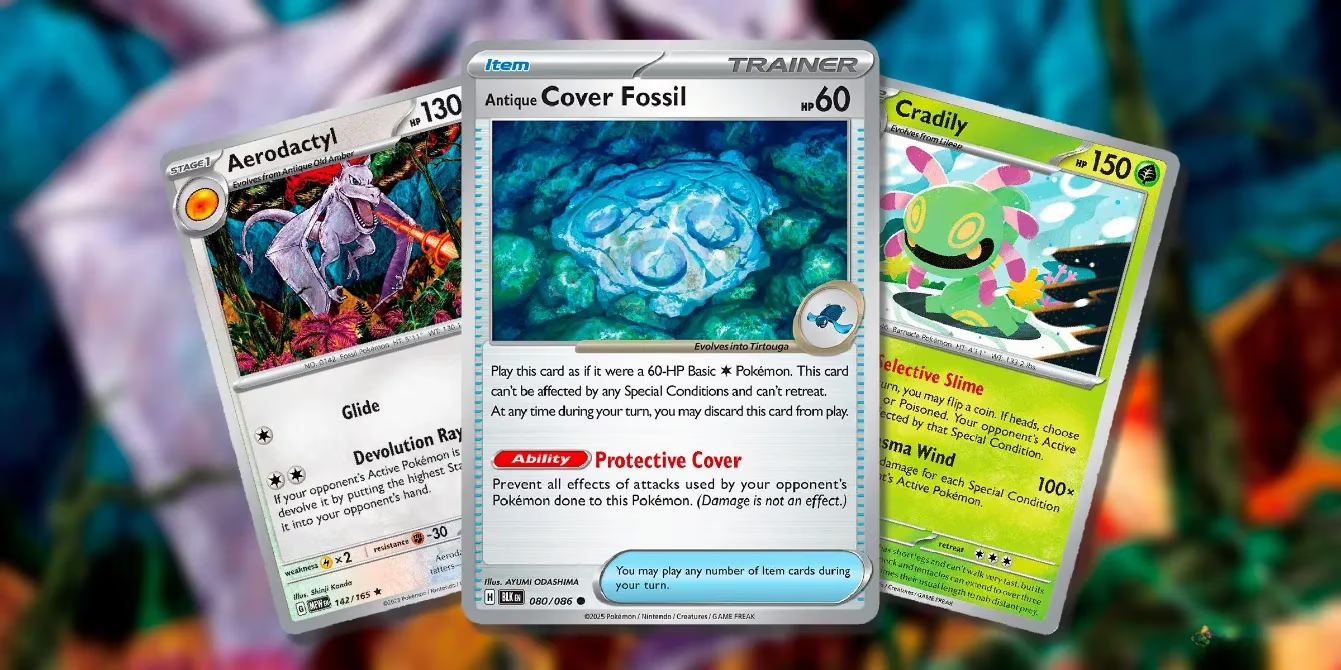
Fossil Pokemon have been around since the very beginning of the game, but their rules have changed so many times that even I have to pause and re-read them sometimes. These cards start as item-like Fossil Trainer cards before they count as Pokemon. You first place the Fossil item on your Bench, then search your deck for the corresponding evolution to place on top. That means you are hunting for both an Item card and a Pokemon card, which can make setup feel like a scavenger hunt. The good news is that many Fossil items have helpful abilities, but there is a catch: if the resulting Pokemon is knocked out, the item still gives up a Prize Card. Also, do not try to place one during initial setup, because it still counts as a Supporter card in that moment. I have made that mistake more than once.
Ace Specs And Team Flare Hyper Tools: Powerful But Very Tricky
If you have ever looked at an Ace Spec card and thought it was completely broken, I do not blame you. These cards can have some of the most powerful effects in the entire game, but there is a balancing rule: you can only include one Ace Spec card in your entire deck. That restriction forces you to choose the exact tool that best fits your strategy. I also want to highlight Team Flare Hyper Tools from the X & Y era. These red Item cards flipped the normal idea on its head because you attach them to your opponent's Pokemon ex instead of your own. Applying negative effects to disrupt your rival felt amazing, and with Mega Evolution content potentially returning, I would not be shocked to see this gimmick come back in 2026 and beyond.
BREAK Pokemon: The Sideways Cards I Still Love
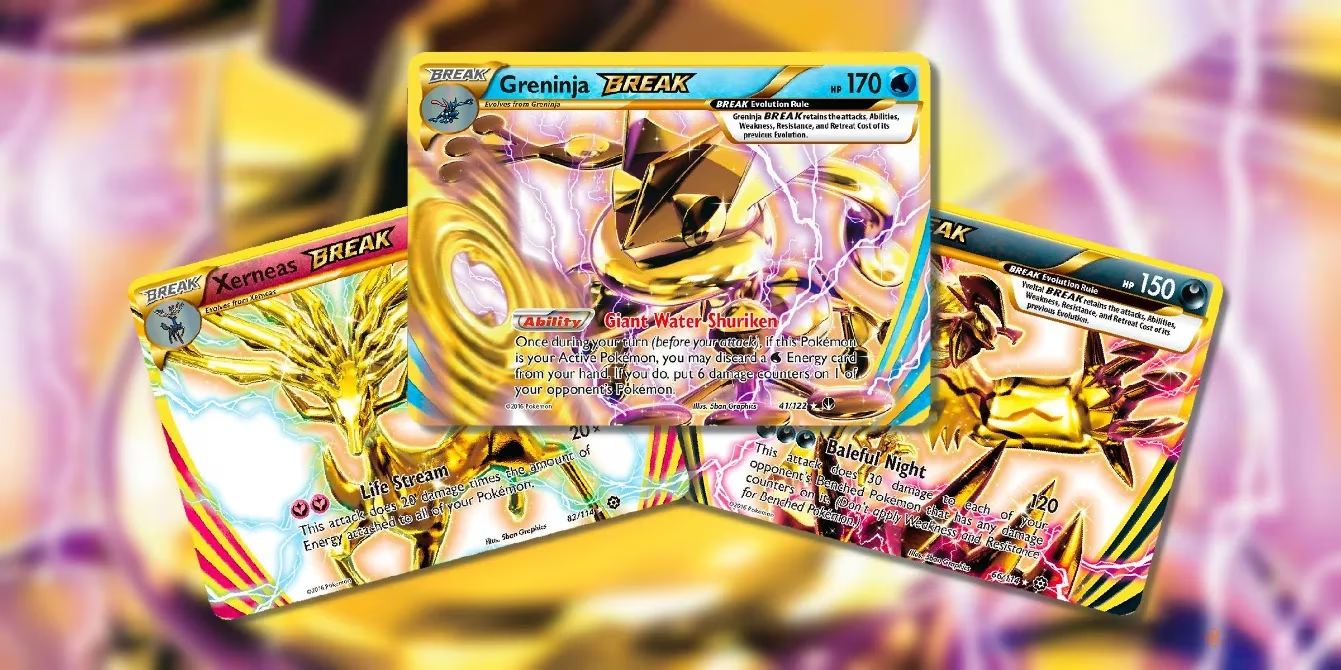
BREAK Pokemon might look strange because they are printed sideways and turn ordinary Pokemon gold, but they represent one of my favorite gimmicks from the X & Y era. You place a BREAK card on top of the corresponding Pokemon, and it gains access to a new move or ability while keeping its old moves and boosting its HP. What I appreciated most was seeing one-prize Pokemon become strong enough to compete with two-prize threats. Even better, you could place a BREAK card on any non-special version of that Pokemon, so you could mix and match base forms without losing the original card's benefits. I genuinely wish we had seen more of these before they rotated away.
Special Conditions: Burn, Poison, Paralysis, And More
Special conditions are a core part of battling, but they can overwhelm new players because there are so many to remember. Let me break down the ones I have encountered most often:
-
Sleep: The affected Pokemon cannot attack or retreat, and during each turn you flip a coin to see if it wakes up.
-
Burn: Requires a coin flip every turn. Tails deals 20 damage, while heads cures the condition.
-
Poison: Deals ten damage each turn and can only be cured by retreating or evolving.
-
Paralysis: Stops attacks and retreats for one turn.
-
Confusion: Forces a coin flip every time you try to attack, and tails makes your Pokemon hurt itself for 30 damage.
I used to keep a tiny cheat sheet at tournaments because these conditions can stack in weird ways, and I recommend every new player do the same.
No Energy Cost And Baby Pokemon: Tiny Cards, Huge Impact
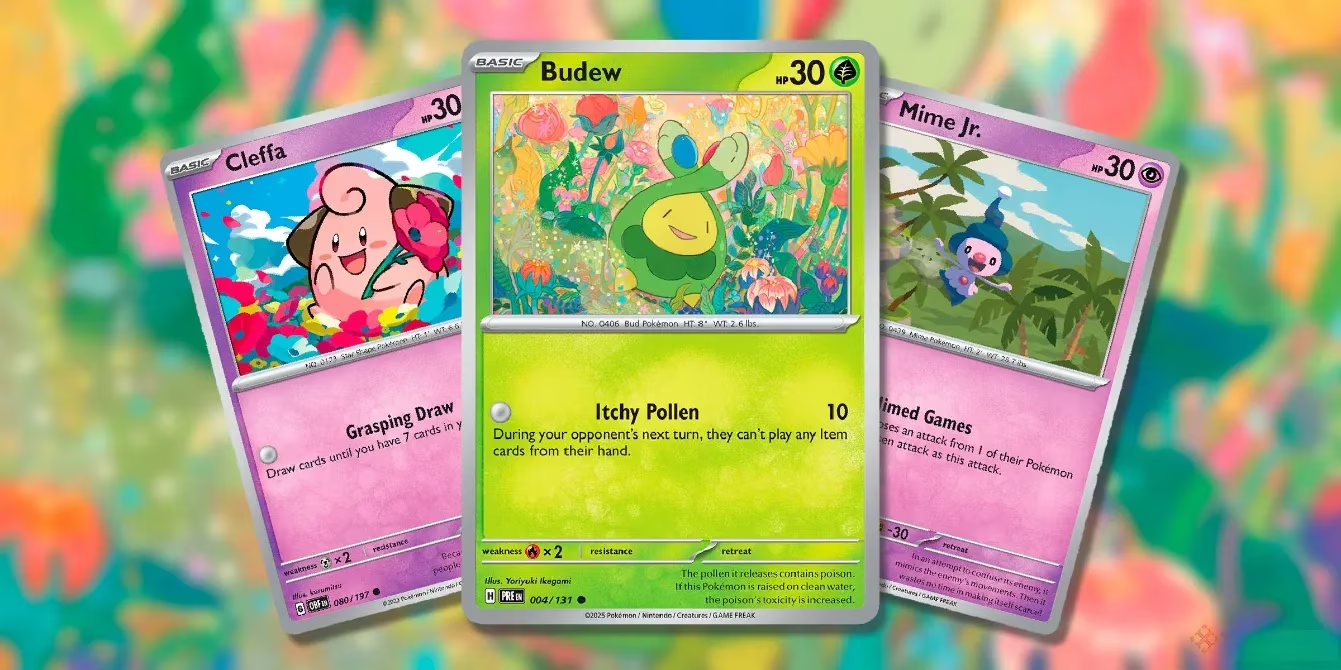
You probably know how Energy works by now, but occasionally you will see a strange blank Energy symbol on a card. That means the attack has no Energy cost at all and can be used for free. This is usually reserved for Baby Pokemon, and do not let their low HP fool you. I have lost more games than I care to admit to cards like Budew from the Scarlet & Violet era. With only 30 HP it looks like a liability, but its attack can lock your opponent out of Item cards, preventing them from using essential pieces of their strategy while you set up your board. Free attacks on tiny bodies can absolutely be menaces, and I love building decks around them.
The Lost Zone: Banishing Cards Forever
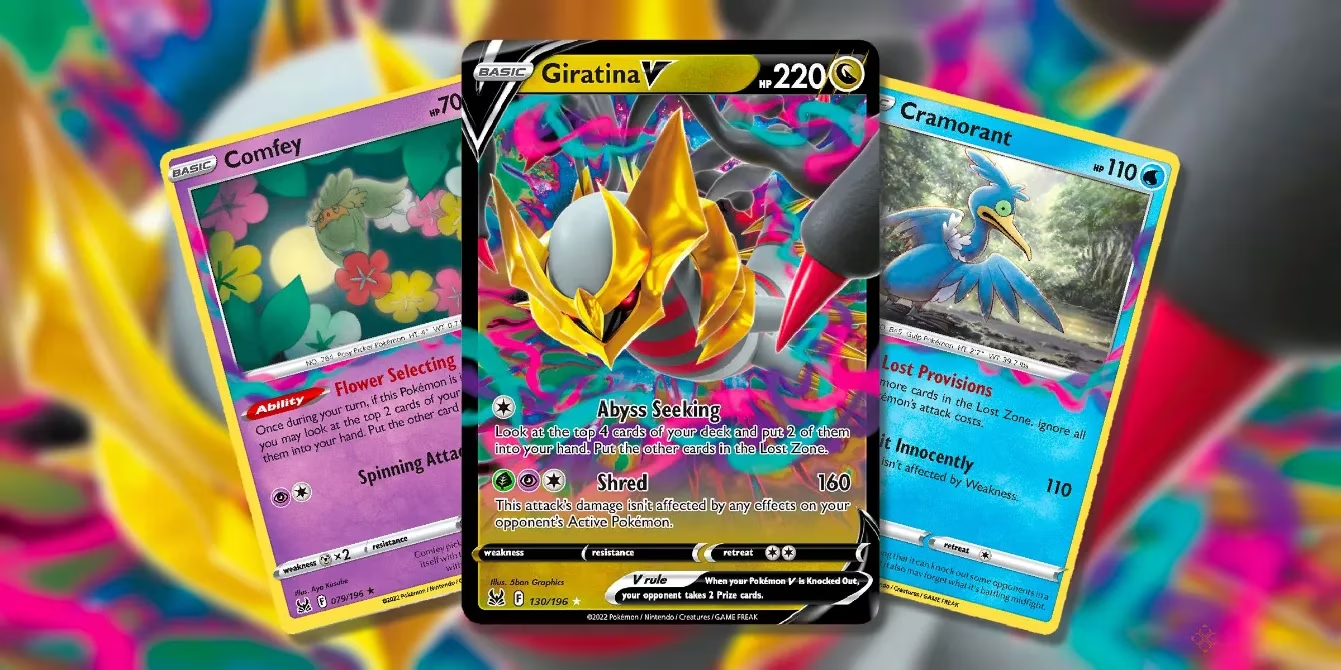
The Lost Zone is one of those mechanics that returns in nearly every era, and it still confuses people the first time they encounter it. In simple terms, it is a permanent discard pile. Once a card enters the Lost Zone, there is no way to recover it by any means. Many cards specifically send other cards to the Lost Zone so you can build up a pile and unlock powerful attacks. The trade-off of permanently losing cards is not as bad as it sounds, because the payoff of a fully stocked Lost Zone can completely swing a match. I have seen Lost Zone decks remain competitive for years, and I expect that trend to continue as we move deeper into the current era.
Legend And V-Union Cards: One Pokemon, Multiple Cards
The strangest concept the game has ever tried is Pokemon that need multiple cards before you can even play them. This started with Legend cards in the HeartGold & SoulSilver era, where you needed two specific card halves in your hand to assemble one powerful Pokemon on your Bench. Legend cards were never exactly game-breaking, but the idea returned in the Sword & Shield era with V-Union cards. Those are made of four separate cards, and all four must be in your hand before you can put the Pokemon down. Your reward is a Pokemon that can have up to seven moves or abilities, but it gives your opponent three Prize Cards when knocked out. I find these cards hilarious and impressive, but I would rather build a consistent deck than chase a four-card combo every match.
After all these years, the Pokemon TCG still has room for strange ideas, and that is exactly why I keep coming back. If you have ever felt lost at a table because of a weird rule, just know that every veteran has been there. The best way to learn is to ask questions, make a few mistakes, and keep playing. Once these mechanics click, the game opens up in ways you never expected, and you will be building wild, creative decks just like I am in 2026.