
It has been a little over a year since Pokemon Trading Card Game Pocket burst onto mobile screens, and its debut still echoes across the industry. According to the latest market data from AppMagic, the digital card game raked in an estimated $1.3 billion in global player spending across iOS and Android during its first 365 days. That staggering figure unseats Pokemon GO’s historic first-year record, making Pocket the most successful Pokemon mobile launch in history by this metric.

The initial momentum was nothing short of electric. Within 24 hours of its release, Pocket generated $1.9 million, marking the third-largest mobile game launch ever recorded. By the end of its first month, revenue had already soared to $208 million. The pace only accelerated through spring, with the title surpassing $1 billion in late May 2025, well before its October anniversary. Around that same milestone, The Pokemon Company proudly announced that downloads had crossed 150 million. Do the math and it translates to roughly $8.66 per install—though the true per‑player revenue is certainly higher, since many trainers reinstall across devices or jump back in after a break.
Japanese developer DeNA is not resting on its laurels. The company launched a special anniversary event on October 30, 2025, fueling a fresh wave of engagement just as the game entered its sophomore year. But can Pokemon TCG Pocket truly maintain this blistering pace? After all, the live‑service landscape is littered with titles that couldn’t sustain a smash‑hit debut. While Pocket outran Pokemon GO’s first year, the lifetime revenue gap between the two is still a monumental $7.5 billion. Niantec’s monster‑catching phenomenon received a once‑in‑a‑lifetime boost from the global pandemic in 2020—a perfect storm of lockdown spending that lifted it to record heights near its fourth anniversary. Pocket has no comparable tailwind on the horizon.
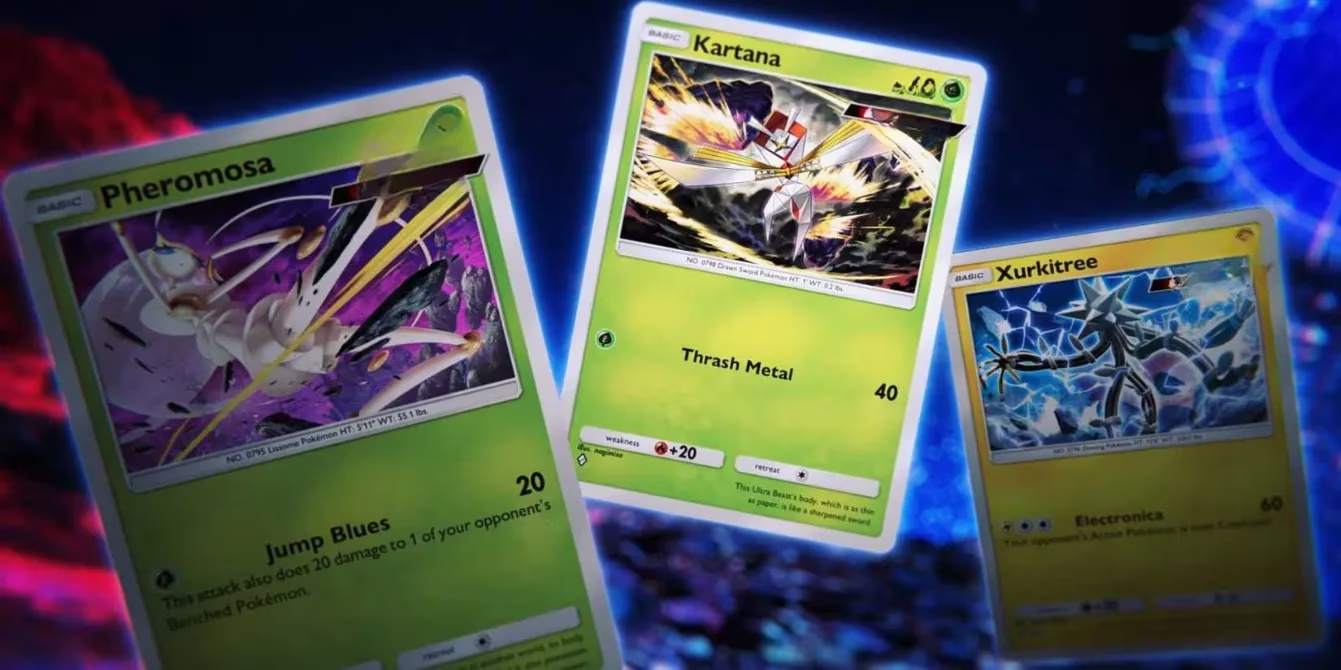
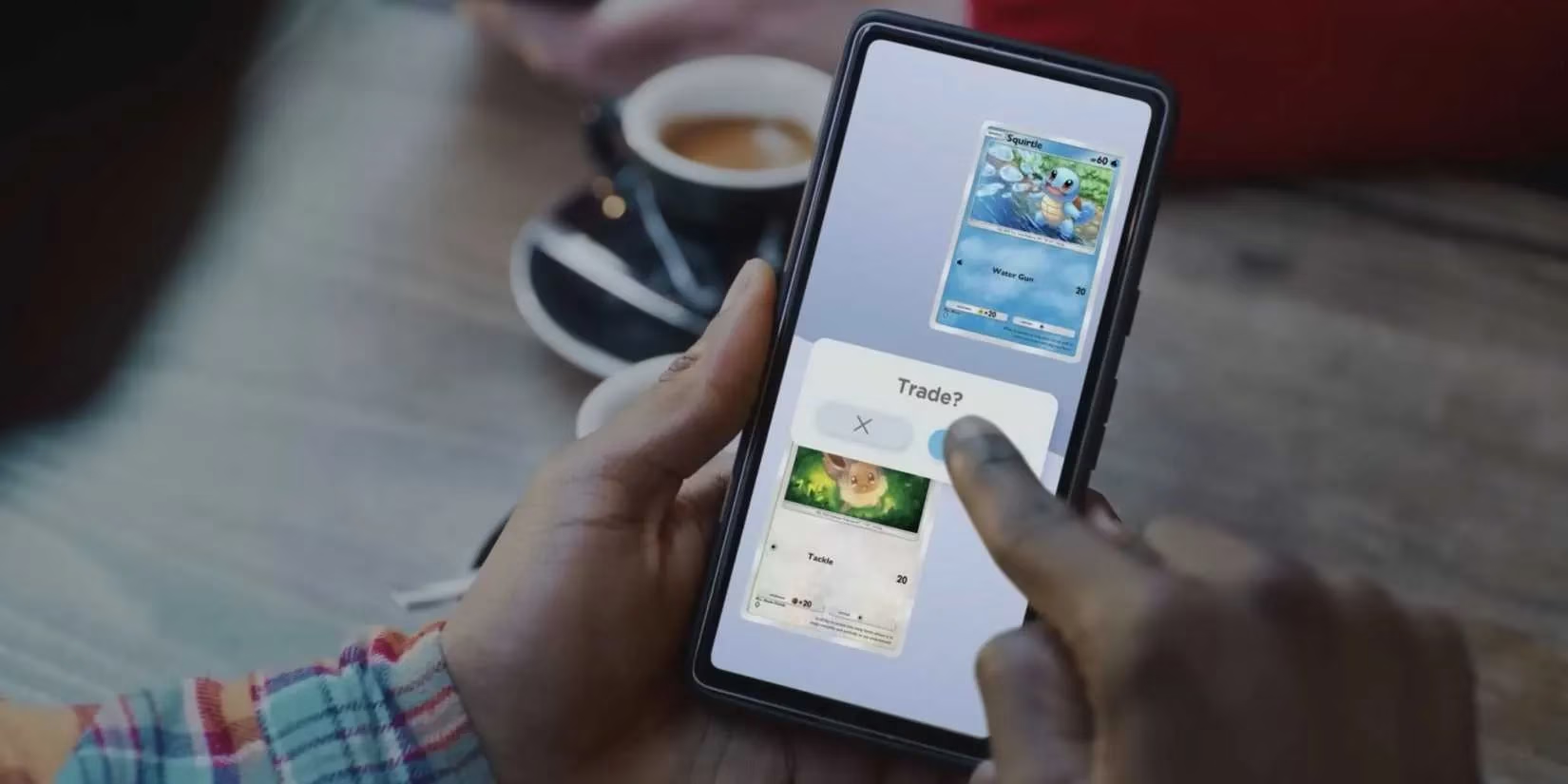
Monthly revenue has indeed eased in recent months, a natural arc for a game transitioning out of its launch window. Industry watchers note that only a handful of live‑service hits manage to out‑earn their first year—and even fewer do so twice. Spending in these games tends to arrive in waves, driven by seasonal events, new card set releases, or major feature updates like the recently introduced trading system. DeNA appears keenly aware of this rhythm; the anniversary celebration was packed with limited‑time missions, cosmetic rewards, and a fresh booster pack lineup that reignited community hype.
Now, as 2026 unfolds, the big question lingers: will Pokemon TCG Pocket defy the typical second‑year slump? The developer has already demonstrated an ability to invent reasons for players to open their wallets without shattering the core appeal. Perhaps a steady cadence of interesting expansions, competitive tournament features, and social mechanics will be enough to keep the tills ringing. Could Pocket become the rare mobile title that actually grows its annual revenue after year one? That would require not just timely content drops, but the kind of cultural stickiness that only a handful of franchises have ever achieved. With the Pokemon brand’s unmatched reach and DeNA’s live‑service expertise, it’s far too early to count out this digital TCG. One thing is certain: the second year will be the real test—and the whole industry is watching.