
Wow, can you believe it's already 2026? Just over a year ago, the Pokemon TCG world was flipped on its head, and I'm here to tell you, the tremors are still being felt! I remember it like it was yesterday: October 2024. The Pokemon Company dropped Pokemon TCG Pocket, a slick little digital card app, and little did we know, it wasn't just launching a game—it was lighting a fuse on a powder keg of nostalgia and greed that would send the physical card market into the stratosphere. Seriously, who could have predicted that a free-to-play app would become the single most disruptive force in the history of collectible cardboard?
The Stats That Stunned the World
Let's talk numbers, because the figures from that first year are nothing short of mind-blowing. According to the data that surfaced last year from sources like PokeBeach and AppMagic, Pokemon TCG Pocket didn't just succeed; it obliterated every expectation. How much revenue are we talking about? A cool $1.25 BILLION in its first 12 months. Let that sink in for a second. That's more than the legendary Pokemon Go managed in its debut year! In fact, it reportedly made more than every other Pokemon mobile game's first year combined. Isn't that absolutely insane? The app didn't just attract players; it created a whole new generation of fanatics, myself included.
From Screen to Shelf: The Impossible Hunt Begins
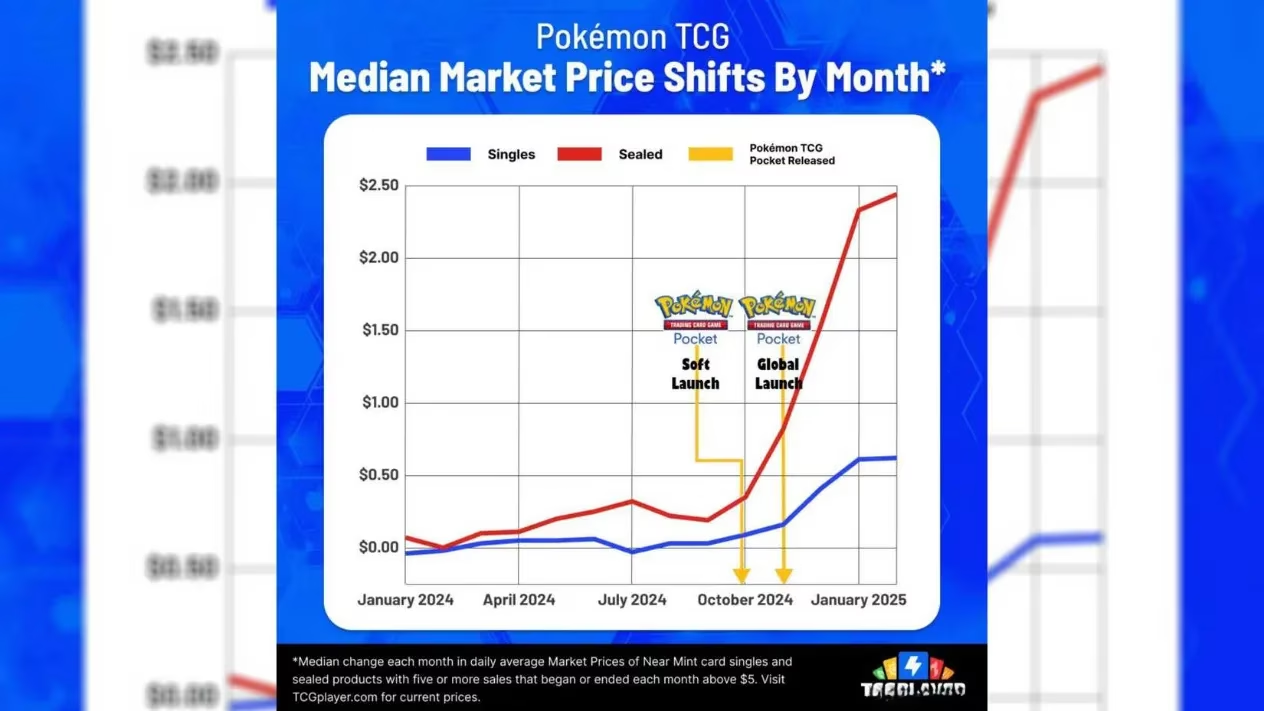
And here's where the real story begins. That massive digital success had a direct, explosive impact on the real world. PokeBeach's analysis, using TCGPlayer data, painted a crystal-clear picture. Remember that graph? It showed the median market price for sealed Pokemon products. Before Pocket launched, prices were actually in a bit of a dip. Then, October 2024 hit—BOOM. The line on that graph didn't just climb; it shot up like a rocket. By the beginning of 2025, median prices were roughly FIVE TIMES HIGHER than they were at Pocket's launch. Can you imagine? A booster pack that cost $5 one day felt like a bargain a few months later compared to the $25 people were scrambling to pay.
Why? Because people like me got the bug—badly. I'm an elder millennial. My childhood collection is probably compost by now, lost to time and my mom's spring cleaning. But playing Pocket, with its gorgeous animations and easy-to-learn mechanics, reignited that collector's flame. I wasn't alone. Thousands, maybe millions, of lapsed and brand-new fans felt the same urge: "I need to hold the real thing." We wanted to feel the texture of the foil, smell that new card smell, and build a collection we could actually touch. But what we found when we went looking was... nothing. Shelves were bare. Online stores showed "Out of Stock" within minutes of a product drop. What on earth was happening?
The Villains of the Piece: Scalpers and Scammers
Ah, but the renewed passion of genuine fans like myself was only part of the equation. The real culprit behind the shortages and insane price hikes? A tsunami of new-age scalpers and scammers who saw our nostalgia as a business opportunity. They cottoned on faster than a Pikachu using Quick Attack. These weren't your old-school collectors; these were bots and bulk buyers looking to make a quick buck. They'd swoop in, buy every ETB (Elite Trainer Box), every booster box, every special collection the second it went live, leaving the rest of us staring at empty digital carts.
This created a vicious cycle:
-
Hype from Pocket drives demand sky-high.
-
Scalpers use bots to buy all stock instantly.
-
Genuine fans can't find products at retail price.
-
Scalpers flip products on secondary markets for 3x-5x the price.
-
The perceived scarcity makes the cards seem even more valuable, fueling more hype.
It became a self-fulfilling prophecy of misery for players and a gold rush for opportunists. Trying to find the latest set at a local store in 2025 felt like a legendary Pokemon hunt—exhausting, expensive, and often ending in disappointment.
The Legacy and The Lesson
So, as we sit here in 2026, what's the legacy of Pokemon TCG Pocket's earth-shattering first year? It proved, beyond a shadow of a doubt, that digital and physical collecting aren't rivals; they're powerful allies. The app was a gateway drug that brought an immense wave of new energy and capital into the hobby. The Pokemon Company must be pinching themselves—they created a digital product that supercharged their physical sales to unprecedented levels.
But it also exposed the dark underbelly of modern collectibles. The market is now a battleground between fans and flippers. While the initial frenzy has cooled slightly from its 2025 peak, the landscape is permanently changed. Products still sell out fast, and the secondary market is more prominent than ever.
For me, the journey continues. My collection, started from scratch thanks to a little app on my phone, is growing. But every time I see an empty shelf where cards should be, or a ridiculous price on a marketplace, I remember October 2024. That's when a digital dream turned into a very real, very chaotic, and incredibly expensive cardboard reality. Who knew that the most powerful Pokemon in 2024 wouldn't be a legendary, but an app icon on our phones? The question now is, what will the next year bring? 🤔