
It's not every day you see a single person single-handedly rewrite the market rules of a decades-old trading card game, but that's precisely what's unfolding in the Pokémon TCG world as we move through 2026. I've been watching, utterly fascinated, as a mysterious figure known only as the 'Kabuto King' has executed a collecting strategy so audacious and effective that it has sent shockwaves through the entire community. What started as a quirky, niche obsession a few months back has blossomed into a full-blown economic phenomenon, turning a card once considered bulk into a coveted commodity and sparking debates about value, scarcity, and the very nature of collecting.
The Genesis of a Monopoly
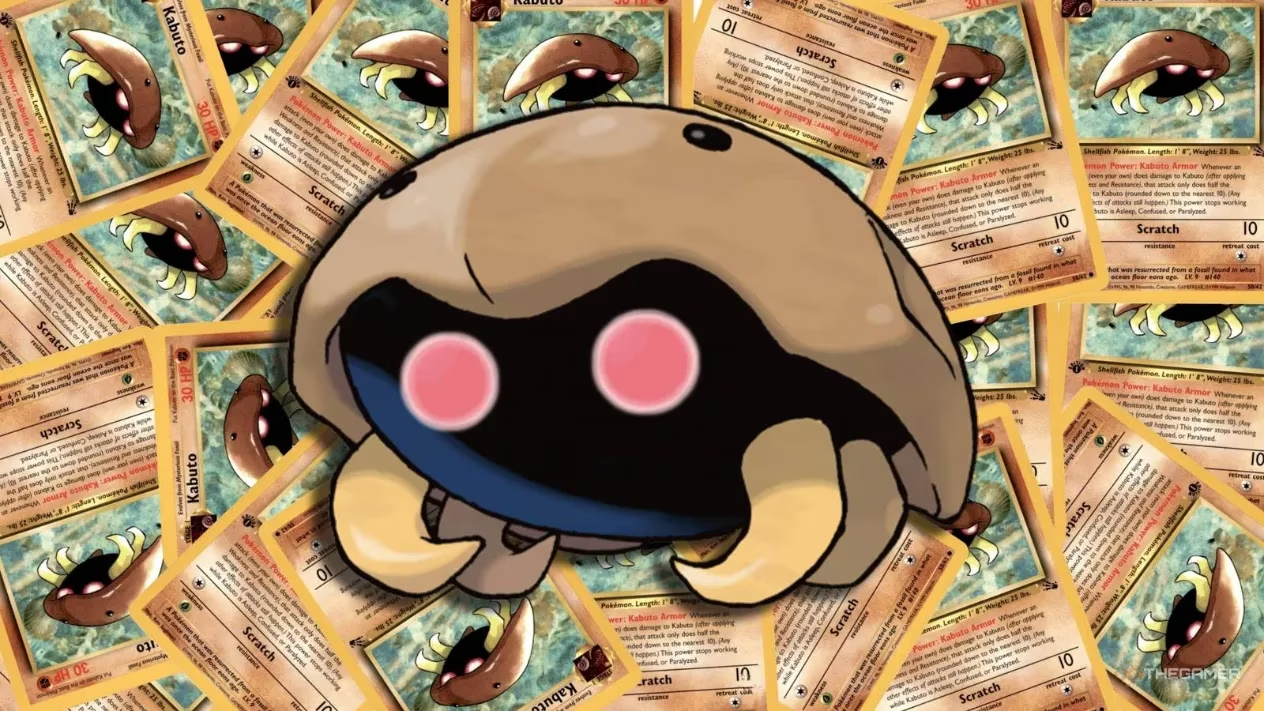
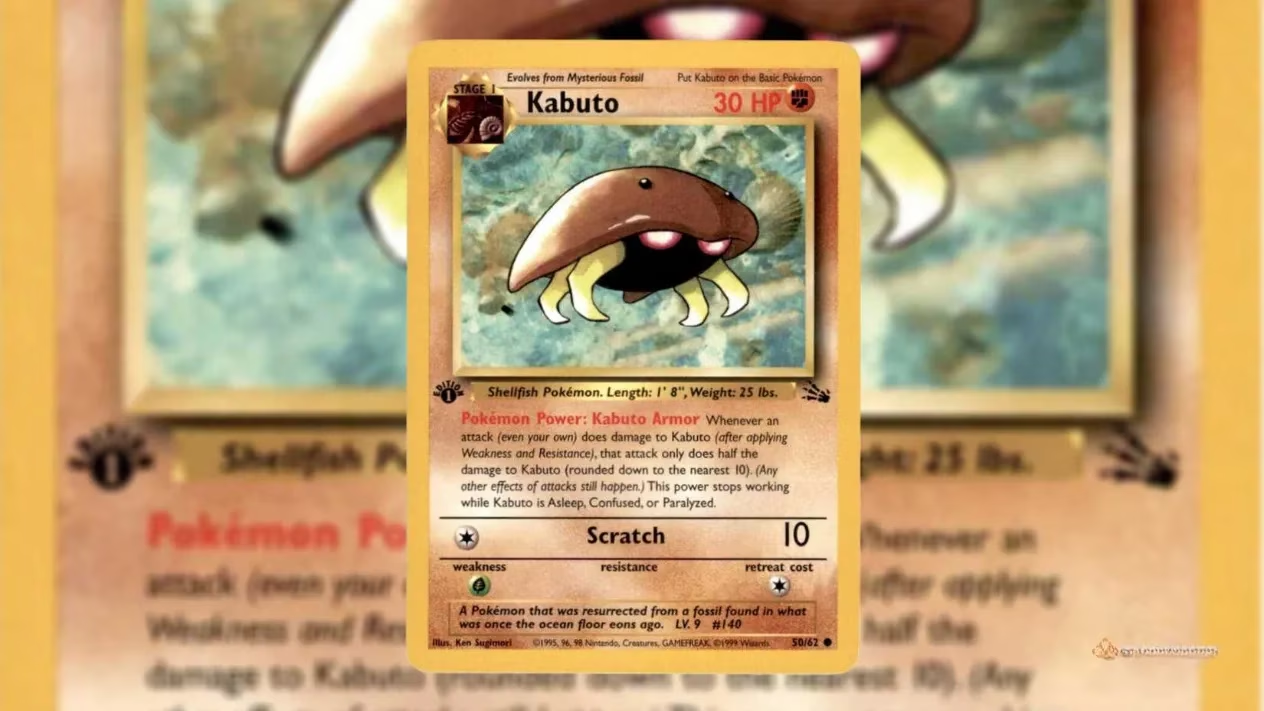
The Kabuto King's story is a modern fable of supply and demand. Their goal, stated plainly from their anonymous social media accounts, was deceptively simple: to acquire every single surviving first edition Kabuto card from the original Fossil set. For years, this card was the definition of common. Printed in the thousands over twenty years ago, a near-mint copy could be snagged for a mere $2—often less. It was the kind of card you'd find in a dusty box at a garage sale or thrown in as filler in a bulk lot. Nobody wanted it; it was just… there. The King saw not a worthless piece of cardboard, but an opportunity. By methodically purchasing these cards from online marketplaces, local game stores, and private collectors, they began amassing a hoard of historic proportions.
The Tipping Point and Market Frenzy
The community largely ignored the King's early efforts. When they surpassed 1,000 cards in September 2025, it was seen as an eccentric hobby, not a market-moving event. The real shift happened in late November and has accelerated into 2026. As word of their massive collection spread virally, a collective realization dawned: if one person owns most of the available supply, the card is no longer common—it's rare. This psychological trigger ignited the market.
Here’s a quick timeline of the price explosion I’ve tracked:
| Date | Key Event | Approximate Market Price (Near-Mint) |
|---|---|---|
| Pre-September 2025 | Baseline, pre-King influence | ~$2.00 |
| November 28, 2025 | Historic Break: Price first crosses $10 | ~$10.50 |
| December 2025 | Viral awareness spreads; King's collection hits ~1,748 cards | ~$16.00+ |
| Early 2026 (Present) | Market stabilizes at a new, inflated equilibrium | $15-$25 (Highly volatile) |
Essentially, the King's collection of over 1,700 cards has tripled or even quadrupled in value in a matter of months. This has created wild, knee-jerk reactions across platforms like eBay and social media groups. 😲
-
Speculators & Sellers: People are digging through old binders, listing their once-neglected Kabutos for absurd prices—sometimes hundreds of dollars—hoping to cash in on the hype or attract the King's direct purchase.
-
Skeptics & Critics: A vocal group accuses the King of a 'pump-and-dump' scheme, artificially inflating the price to later sell the entire lot for a massive profit.
-
The King's Response: To the critics, the King has been cryptic but firm. They've stated there is a "master plan" no one knows, declared they are "never selling," and have even told reluctant sellers to "keep it safe" if they refuse to part with their card. This defiance of typical profit motives only deepens the mystery.
The Paradox of Value and the King's Endgame
This is where the situation becomes a fascinating economic paradox. The critic's theory of a pump-and-dump scheme contains its own fatal flaw: the card's value is entirely tied to the King's collection remaining intact. The moment the King decides to liquidate and flood the market with 1,700+ Kabutos, the scarcity vanishes instantly, and the price would crater. The value isn't inherent to the card; it's inherent to the monopoly. This makes the King's claim of "never selling" a crucial pillar of the card's current worth. It’s a self-sustaining cycle: the vow not to sell maintains scarcity, which maintains high prices, which makes the collection more legendary.
So, what is the endgame? As an observer, I see several possibilities, none of which involve a conventional sale:
-
The Artistic Statement: Perhaps this is a performance art piece or social experiment about value, obsession, and market manipulation in the TCG world.
-
The Ultimate Collection: The goal might be purely completist—to own a literal monopoly for the personal satisfaction of achieving the impossible.
-
Creating a Legacy: The King could be building a unique, museum-worthy collection centered on a single, humble card, recontextualizing it as a cultural artifact.
The Ripple Effect on the Wider TCG Community
The Kabuto King's crusade has implications far beyond a single fossil Pokémon. It has made every collector look at their bulk bins differently. Questions now linger in the community chatrooms I frequent:
-
Could this be done with another common card? 🤔
-
Are we undervaluing the sheer power of concentrated ownership?
-
How do we define 'value'—is it playability, nostalgia, or manufactured scarcity?
It has also sparked a mix of admiration and anxiety. Some see the King as a visionary, playing the game on a meta-level most never consider. Others see a dangerous precedent where the whims of one individual can destabilize the market for a collectible.
My Perspective and the Unanswered Questions
Trying to get answers has been part of the journey. I, like many others, have reached out to the enigmatic Kabuto King for comment, hoping to understand the motivation behind this monumental effort. As of now, the master plan remains shrouded in mystery. Their silence only adds to the legend. Whether this is a genius financial move, a profound artistic endeavor, or simply the world's most dedicated act of fandom, one thing is undeniable: the Kabuto King has permanently altered the landscape. They have proven that in the world of collectibles, value is a narrative, and sometimes, you just need one compelling author to change the entire story. The card that nobody wanted is now the card that defines a market shift, and its king sits atop a throne of swirling, self-made demand.